
LSU Herpetologist’s New Snake Discovery Gets a Rock ’n’ Roll Name
August 26, 2026
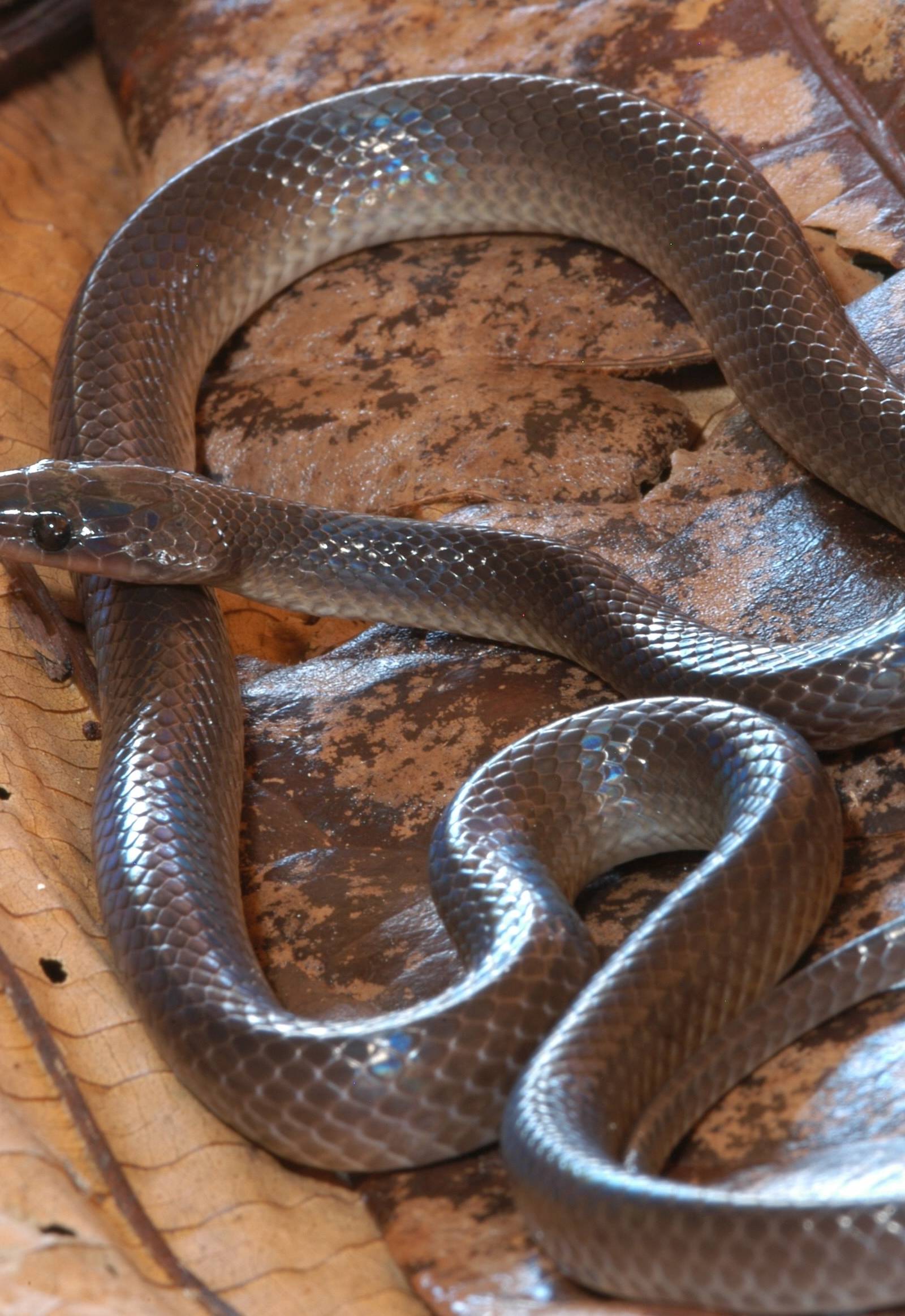
Lielaphis slashi, or Slash’s groundsnake, is a nonvenomous, nocturnal snake from New Guinea named for Guns N’ Roses guitarist Slash.
– Credit: Chris Austin
LSU herpetologist Chris Austin has helped describe 53 new species of frogs, lizards, and snakes over his career — and he has roughly 30 more potential new species from his fieldwork still awaiting description. His latest to join the scientific record comes with a rock ’n’ roll name: Lielaphis slashi, or Slash’s groundsnake, named for Guns N’ Roses guitarist Slash.
Austin, professor of biological sciences and Curator of Amphibians & Reptiles at the LSU Museum of Natural Science, encountered the reddish-brown snake during a nighttime expedition in New Guinea in 2006. Nearly two decades later, he and collaborators confirmed that it was a species new to science.
At about 28 inches long, Slash’s groundsnake is nonvenomous and active at night. Austin says New Guinea groundsnakes are typically found just after sunset near the base of large trees, where they search for food. Finding them requires care: several highly venomous snakes in New Guinea can resemble nonvenomous ones.
The name came from Austin’s former LSU postdoctoral researcher and longtime collaborator, Dr. Sara Ruane, now associate curator of herpetology at the Field Museum in Chicago. Ruane grew up as both a Guns N’ Roses fan and a reptile lover and proposed honoring Slash for his lifelong interest in reptiles and support for museums and zoos.
An eye—and an ear—for discovery
Lielaphis slashi illustrates something Austin has learned through more than three decades of fieldwork in New Guinea: new species don’t always announce themselves in the same way.
In the case of L. slashi, its appearance alone wasn’t enough to recognize it as something new. Only after researchers compared genetic and physical evidence did its differences from related snakes come into focus. Other discoveries can stand out sooner. With frogs, for example, an unfamiliar call can be the first clue.
“I hear a call and think, ‘I’ve never heard that frog before,’” Austin said. “Then it’s, ‘Okay, let’s go. We’ve got to find it.’ And that’s exciting.”
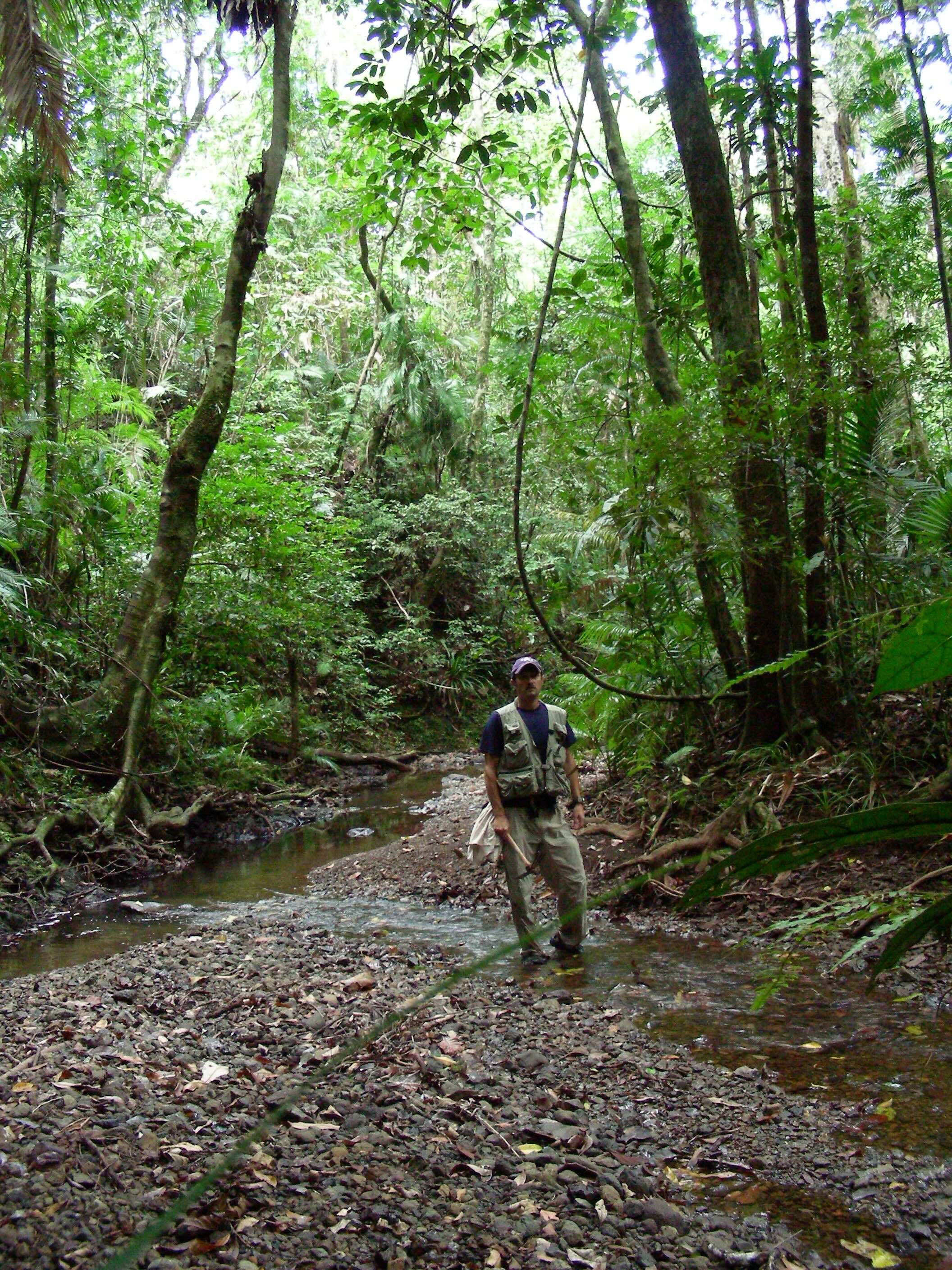
LSU herpetologist Chris Austin during fieldwork in New Guinea, where he encountered the snake that would later be recognized as Lielaphis slashi.
One remarkable example is Paedophryne amauensis, a tiny frog Austin and his team discovered in Papua New Guinea in 2009. Described in 2012, it is recognized as the world’s smallest known vertebrate.
Whether the first clue comes from sight, sound or genetic analysis, researchers still need to establish what makes a species distinct.
“We look at multiple lines of evidence—morphology, color pattern, DNA and, for frogs, their mating calls,” Austin said. “Then you have to determine what distinguishes that species from every other species in the genus.”
For L. slashi, those differences were subtle but telling. The snakes were initially identified as another groundsnake species, but DNA analysis revealed a distinct lineage. A closer look also revealed differences in the number and arrangement of scales around the mouth, belly and tail, along with a pale white-to-cream underside that sets it apart from its closest relative. Together, those clues confirmed they were looking at a species new to science.
From tiny frogs to a nonvenomous snake named for Slash, Austin has spent decades discovering and documenting the region’s biodiversity. With roughly 30 more potential new species from his fieldwork awaiting description, L. slashi is unlikely to be his last discovery.